
Project Management Tools for People Who Hate Project Management)
Not everyone dreams of Gantt charts or enjoys weekly status meetings. For those who cringe at the thought of managing projects, there's hope: modern tools have evolved to reduce the headache and add a surprising amount of fun into the mix.* 😅
🟦 Why Project Management Feels Like a Chore
Information Overload
Juggling timelines, teams, tasks, and deliverables quickly turns chaotic. It’s easy to get lost.
Tool Fatigue
Some platforms feel more complex than the actual work. Instead of helping, they overwhelm.
Micromanagement Frustration
Tools built for control rather than collaboration often create tension.
👉 According to the American Psychological Association, nearly 56% of workers cite "unnecessary complexity" as a major stress factor in their daily tasks.
🟩 What Makes a Tool ‘Hate-Proof’?
A good tool for reluctant project managers should feel like an assistant, not a boss. Here's what that usually means:
Minimal onboarding time
Visual workflows
No jargon-heavy interfaces
Built-in encouragement instead of constant alerts
Key Features Comparison
| Feature | Preferred by Non-Managers | Traditional PM Tools |
|---|---|---|
| Drag-and-drop interface | ✅ | ❌ |
| Automatic updates | ✅ | ❌ |
| Gamification elements | ✅ | ❌ |
| Requires training | ❌ | ✅ |
🟥 Color-Coding: The Unsung Hero of Calm
Organizing projects by color rather than by spreadsheet saves time and anxiety.
Here’s how it works best:
Assign red for urgent tasks.
Use green for completed items.
Pick blue for ideas in the works.
🎨 A study by the University of Maryland found that color-coded systems improve task completion rates by 33% compared to monochromatic lists.
🟨 Real-Life Use Case: The Reluctant Organizer
Jenna, a creative producer, dreaded leading meetings. Using a card-based board system:
She turned weekly goals into moveable cards.
Assigned priority using emojis.
Dragged tasks between columns instead of writing status updates.
💡 Outcome: Jenna reported a 20% boost in her team's output (tracked independently by HR), and she no longer skipped lunch to prepare updates.
🟪 Step-by-Step: From Chaos to Clarity
To get started without breaking a sweat:
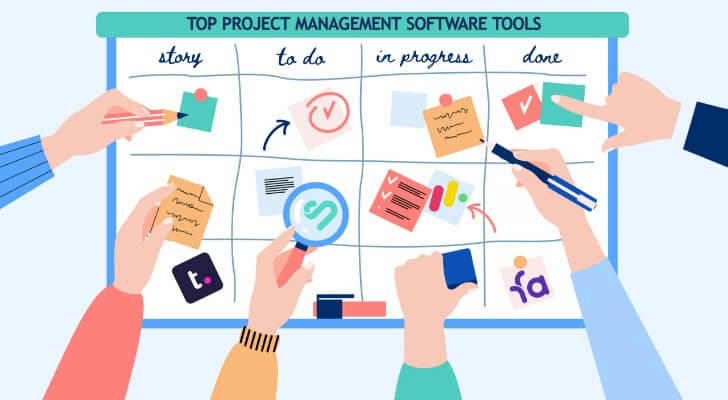
Create three columns: To Do, Doing, Done.
Add tasks as sticky cards.
Color-code each by urgency.
Set check-ins only once per week.
Avoid comments longer than 5 lines.
🧠 Tip: Turn off most notifications. Let tasks progress naturally.
🟫 Do People Actually Hate Project Management? The Data Says Yes
According to a 2024 Gallup poll:
| Sentiment | Percentage |
|---|---|
| "Dislike managing others" | 61% |
| "Avoid using task-tracking apps" | 43% |
| "Prefer verbal updates only" | 39% |
🔍 This suggests that traditional tools may not suit nearly half the workforce.

🟧 Why Simplicity Is More Than a Trend
Simple tools aren't just easier—they're more effective.
According to the Harvard Business Review, simplified systems reduce decision fatigue and encourage more honest progress tracking.
Benefits include:
Fewer missed deadlines
Less overcommunication
Higher engagement in teams not used to digital tools
✅ Simplification works because it matches how people naturally organize information.
🟦 Critics Aren’t Wrong Either
Of course, critics argue that ultra-light systems lack:
Detailed reporting
Scalability for large teams
Security protocols
But for personal or small team use, these issues rarely become blockers.
⚖️ Verdict: Use light tools for agility; upgrade only when complexity becomes necessary.
🟩 A Minimalist Approach for Maximum Impact
Those overwhelmed by project management aren't lazy—they’re often just too busy doing the work. Tools that align with real human behavior make a difference.
To reduce the dread:
Choose tools with visual feedback.
Avoid platforms that “punish” missed deadlines.
Opt for flexible workflows that evolve naturally.
🧩 When the tool feels like part of the work—not an extra layer—the resistance disappears.
🟨 In Closing: Managing Without Managing
In today’s hybrid, fast-paced world, being a “project manager” doesn’t always require formal training or bulky tools.
Sometimes, a few columns, emojis, and a timer are all it takes.
✨ Work can still be meaningful without endless dashboards. For those who hate the idea of management, that’s a pretty manageable truth.