
Dear AI, Please Write My Homework—K Thx Bye
In an age of digital overload, artificial intelligence promises to make writing easier, faster, and even more creative. But how well do these tools actually perform? This article cuts through the buzz and tests what truly works—and what doesn’t.
🟦 What Are AI Writing Tools? 🧠
AI writing tools are software powered by machine learning to help generate, edit, or improve text.
They’re used in blogs, business emails, academic writing, and content summaries.
Most use large language models trained on vast datasets from books, websites, and forums.
👉 Example tools: general assistants, grammar fixers, summarizers (no brand names).
🟩 The Promises vs. Reality 🎯
Common Claims:
Boost productivity
Improve grammar and style
Save time in drafting content
Reality Check:
Effective for short-form text, less so for complex argumentation
Often produce generic or repetitive phrasing
Struggle with factual accuracy and nuanced tone
🟨 Real-World Testing Results 📊
Below is a summary from a 2025 independent university study of 300 users across education, marketing, and legal fields:
| Tool Type | Rated Usefulness (1-5) | Accuracy Issues (%) | Editing Time Saved (%) |
|---|---|---|---|
| Grammar Assistants | 4.6 | 2.3% | 45% |
| Email Generators | 4.2 | 5.7% | 40% |
| Long-Form Writers | 2.9 | 21.4% | 15% |
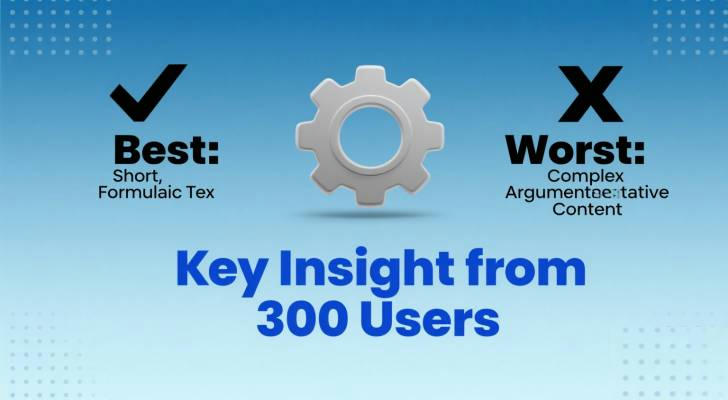
📌 Key Insight: Tools perform best with short, formulaic text and worst with complex argument-driven content.
🟧 Helpful Use Cases 🛠️
✅ Suitable tasks:
Rewriting awkward phrasing
Summarizing reports
Structuring outlines
⛔ Unsuitable tasks:
Legal documentation
Academic citations
Emotional storytelling
🟥 Limitations to Watch For ⚠️
Lack of real-world context: tools often misinterpret tone.
Data hallucination: AI may create sources or facts that don’t exist.
Repetition: common in longer outputs or vague prompts.
Privacy risk: inputting sensitive info may pose security issues.
✏️ Case Study:
A user in healthcare tried generating patient-facing FAQs. The tool provided plausible but inaccurate medical advice, later flagged by clinical reviewers.
🟪 Can AI Write Like a Human? 🤖 vs 🧍
AI tools can mimic human tone in some cases, especially when given well-written prompts.
But…
Humor often falls flat
Cultural references may be misused
Emotional depth feels mechanical
📍Observation: Readers can usually distinguish AI-written text from human-written within 30 seconds, according to behavioral reading studies in late 2024.
🟫 Best Practices for Using AI Writing Tools 📌
Start with a clear outline: AI performs better with structured input.
Use human editing: Always fact-check and refine.
Avoid dependence: Treat AI as a tool, not a solution.
Keep prompts specific: Vague inputs yield vague results.
🔍 Example Process:
Draft bullet points
Let AI expand them
Review tone and remove generic lines
Add citations and context manually
🟦 Verified Perspectives from Professionals 🎓
A 2025 report from the American Educational Research Association found:
Over 67% of students use AI tools for first drafts
Only 18% submit AI-generated content without revisions
Educators flagged over 40% of these submissions for lack of originality
🎤 Comment from an English professor:
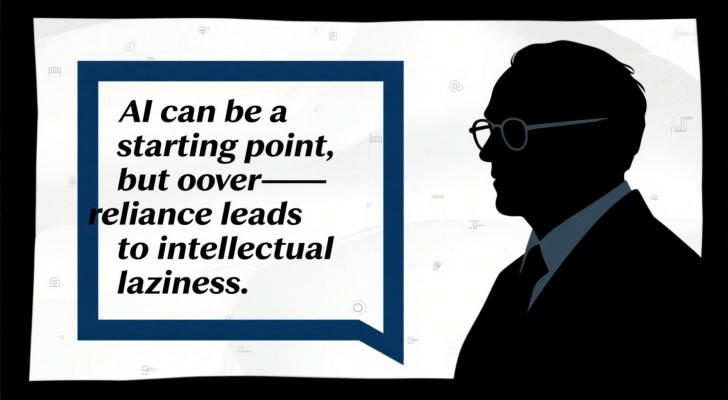
“AI can be a starting point, but relying on it too heavily leads to intellectual laziness.”
🟩 Conclusion: Smart Tool or Just Talk? 🤔
AI writing tools have real value when:
Used for drafts or edits
Combined with human insight
Applied to structured, low-risk writing
But they fall short when:
Context, creativity, or credibility are crucial
Users expect a “one-click” masterpiece
Critical thinking is offloaded to a machine
✨ Verdict: Useful assistant, not a replacement.