
Mental Health Days Are Not Lazy—Here’s the Science
In the fast-paced, high-pressure world of modern life, "mental health days" are gradually evolving from a personal choice to a legitimate need increasingly recognized by businesses, educational institutions, and even public policy. Especially for middle-aged and older individuals experiencing workplace burnout, menopausal mood swings, or family pressures, scheduling a mental health day isn't a sign of laziness, but a responsible choice for both health and productivity.
Why is remote work increasingly important?
According to the U.S. Bureau of Labor Statistics (BLS), over 27% of full-time professional positions will be remote at least part-time by 2024, up from less than 10% before the pandemic. Employers increasingly value independence, self-discipline, and the ability to collaborate remotely. They also prefer to hire candidates with specific skills certifications to reduce the costs and risks of remote training.
What is a mental health day?
A mental health day is a day when individuals temporarily step away from work or daily responsibilities for the purpose of regulating emotions, managing stress, or restoring their mental health. Unlike traditional "sick leave" or "physical discomfort," this day emphasizes adjusting internal emotions, mental workload, and mental state.
This practice is increasingly supported by psychological research and is considered a proactive and positive form of self-care, rather than a sign of shirking responsibility or inefficiency.
Why are mental health days so important?
1.The brain needs a "systemic refresh"
Exposing oneself to prolonged stress or emotional fatigue can impair attention, judgment, and emotional regulation. According to a study published in Clinical Psychology Review, employees who chronically ignore emotional fatigue are at a 37% increased risk of decreased concentration, which can lead to recurring mistakes.
Taking a mental health day is like "clearing the cache" for your brain, effectively restoring cognitive clarity and emotional balance.
2.Emotional repression can accumulate into chronic health problems.
The National Institute of Mental Health (NIMH) states that chronic stress and anxiety not only affect the mind but can also lead to a range of physical problems, including insomnia, high blood pressure, and digestive disorders. Mental health days provide a safe space for people to face their feelings, express their emotions, and adjust.
Why do middle-aged and older adults particularly need mental health days?
For those over 40, mental health challenges have more complex causes and manifestations:
Multiple role pressures: balancing parenting, raising children, and professional responsibilities
Physiological changes that affect emotions: such as menopause in women and hormonal fluctuations in men
Cultural barriers to emotional expression: Some generations, influenced by traditional upbringing, tend to suppress emotions rather than express them
A mental health day provides a judgment-free window for this group to calm down, collect their thoughts, and reconnect with themselves.
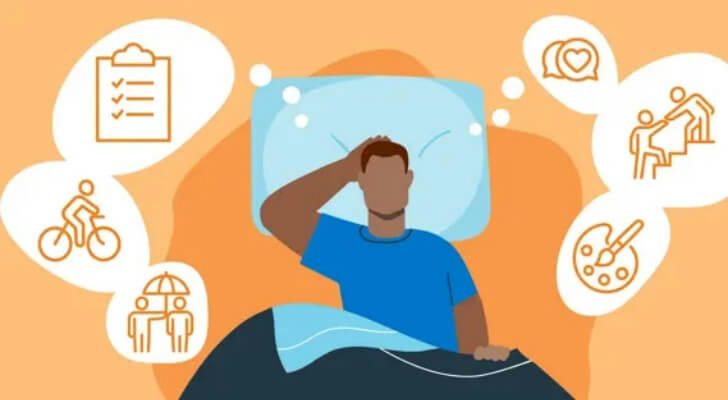
A mental health day isn't just about "lying down at home"—it's about purposeful recovery.

Effective mental health days often have the following characteristics:
✔ Disconnecting from daily work or family responsibilities (such as closing email or pausing caregiving tasks)
✔ Setting recovery goals (such as rest, quiet time, talking, or creative writing)
✔ Using scientific methods to regulate emotions (such as meditation, jogging, talking with friends, or keeping a mood journal)
✔ Observing and accepting emotions rather than avoiding them
A study published in Frontiers in Psychology found that a planned day of rest significantly improves the resilience of anxious individuals and improves overall life satisfaction.
Common Misconceptions and Scientific Responses
| Misconception | Scientific Response |
|---|---|
| "Only emotional breakdowns justify a mental health day." | Mental health days should be used as a preventive measure, not just in emergencies. Proactive rest helps avoid escalation. |
| "Taking time off makes me look unprofessional." | The American Psychological Association (APA) emphasizes that self-care is essential for long-term professional performance. |
| "I don’t have time to stop." | A short pause for emotional recovery is less costly than prolonged inefficiency. |
How to plan an effective mental health day?
✅ Plan ahead: For example, schedule it after a stressful period or after completing a major project.
✅ Set expectations: Tell yourself, "I won't be doing anything work-related today."
✅ Prioritize physical relaxation: It doesn't have to be "work." Sleeping, taking a bath, or meditating are also good options.
✅ Be proactive in addressing your emotions: Use a journal, a meditation app, or someone to talk to.
✅ Reconnect appropriately: A mental health day doesn't mean isolation; light socializing is acceptable.
✅ Don't be too demanding of yourself: Emotional recovery isn't a one-time process; accepting volatility is part of the process.
Business and social support for mental health days
More and more organizations are incorporating mental health into their day off policies. According to data released by the Society for Human Resource Management (SHRM) in 2024:
Over 46% of companies allow employees to take a day off for mental health reasons.
Over 31% of organizations have included mental health in their annual wellness benefits.
A workplace productivity survey shows that employees who regularly take mental health days report approximately 23% higher job satisfaction than average.

Summary: Wellness isn't about escaping, but about returning.
A mental health day isn't essentially about laziness; it's a form of self-care. For middle-aged and older adults, with their complex lives and rich emotional demands, giving themselves a "pause" is not a luxury, but a necessity.
🔑 Just as the body needs rest, the mind needs space. A wise mental health day not only helps restore energy but also allows you to face life's challenges with a clearer perspective.