
Payday Loans vs. Installment Loans: Which One Hurts Less?
💸 In times of financial pressure, short-term loans can feel like a lifeline. But not all borrowing options are created equal. Two of the most common forms—payday loans and installment loans—come with different risks and repayment experiences. Understanding these differences could help reduce long-term financial strain.
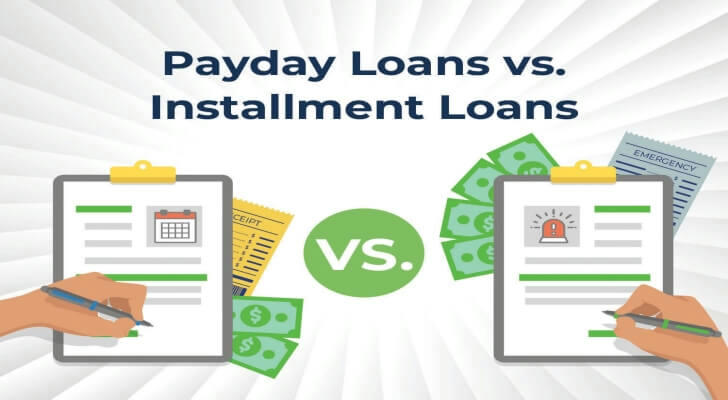
🟨 Understanding the Basics
Payday loans:
Short-term and due in full by the next paycheck.
Commonly used for urgent cash needs.
Typically come with high fees.
Installment loans:
Repaid over a longer period.
Structured with fixed payments.
Generally involve lower rates than payday loans.
📌 Key point: One is quick and steep, the other is slower and structured.
🟩 Who Uses These Loans, and Why?
Data from the Consumer Financial Protection Bureau (CFPB) highlights borrower patterns:
| Loan Type | Typical Users | Common Purpose |
|---|---|---|
| Payday Loans | Individuals with limited savings | Emergency bills 🚨 |
| Installment Loans | People with recurring income sources | Covering budget shortfalls |
💡 These options are often used when traditional credit isn't available.
🟦 The Real Cost Behind the Loan
According to CFPB data, the true cost isn’t always in the dollar amount—it’s in the rate and structure.
| Loan Type | Estimated APR Range |
|---|---|
| Payday Loans | 300% to 600% 📈 |
| Installment Loans | 25% to 100% 🧾 |
Payday loans may cost more even with a smaller principal.
Installment loans are designed for gradual repayment.
Payday loans often involve reborrowing, increasing total debt.
📝 Insight: A smaller loan with a higher rate can cause more damage than a larger, structured loan.
🟥 Repayment Terms: One Blow vs. Many Bites
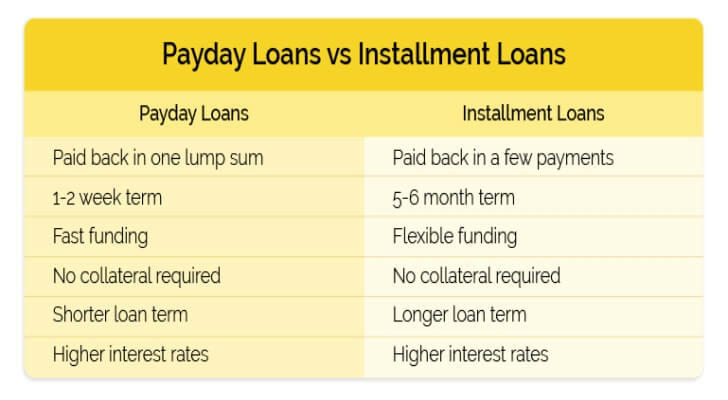
Payday loans:
Require one lump-sum payment.
Often due in 2 to 4 weeks.
Risk of repeated borrowing is high.
Installment loans:
Repaid over months through scheduled payments.
Lower default rates reported by Pew Charitable Trusts.
Can fit into a budget if payments are predictable.
💬 Case Example: Diana, a warehouse worker in Georgia, borrowed using a payday loan. After missing the due date, she rolled it over multiple times, eventually owing triple the original amount. She later switched to an installment loan, which she repaid over six months.
🟪 Regulation and Oversight
Oversight plays a big role in how safe these loans are:
Payday lending is restricted or banned in 18 states.
Installment lending is regulated differently in each state.
📊 In Colorado, reforms lowered payday loan costs by 70%, based on findings from the Center for Responsible Lending. Yet access to small-dollar loans remained stable.
📌 Conclusion: Strong regulation doesn’t eliminate access; it improves borrower outcomes.
🟫 The Debt Spiral: Which Loan Pulls Harder?
Payday loans carry a higher risk of repeat borrowing.
CFPB found that 80% of payday borrowers reborrow within one month.
Installment defaults are more likely tied to long-term financial instability, not loan design.
🔄 Installment structures can give borrowers time to adjust, reducing urgent pressure.
🟧 Application and Access
Payday loans:
Quick application.
Minimal documentation.
Often little credit evaluation.
Installment loans:
May involve income verification.
Sometimes require soft credit checks.
Application process takes more steps.
📌 Speed often sacrifices safety. A few extra steps might prevent long-term costs.
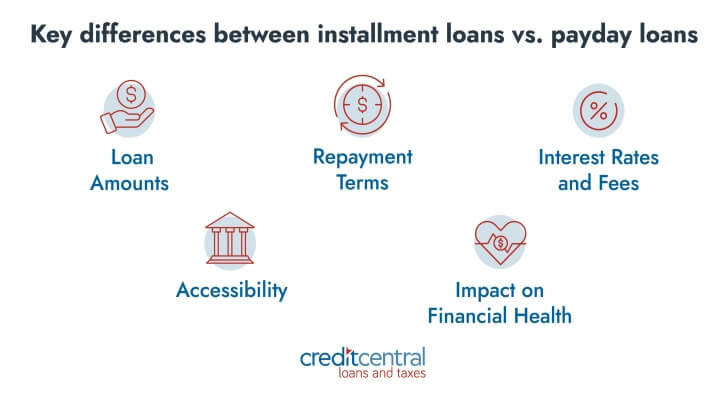
🟦 Step-by-Step: How One Borrower Switched Loans
📖 Case Study: Jordan, 29, from Arizona
Jordan took out a payday loan to fix his car. After two extensions, he owed nearly double what he borrowed. A nonprofit advisor helped him consolidate that into an installment loan.
🔧 His process:
Collected his last three pay stubs.
Submitted a basic budget form.
Chose a six-month repayment plan.
Set up automatic deductions from his checking account.
✅ Result: Jordan repaid the debt without missing another bill.
🟨 Final Verdict: Which One Hurts Less?
📌 Payday loans hit fast, cost more, and often lead to repeat borrowing.
📌 Installment loans take longer to repay but are more manageable when structured fairly.
🎯 While neither option is painless, installment loans generally present fewer long-term risks.
🧠 The difference lies in design. Quick cash might solve a moment—but structured repayment supports recovery.