
Remote Work Isn’t Going Away—Here’s How to Get Ahead of the Curve
Remember the first time a video call replaced a meeting room? Or presenting a deck in pajamas while a cat strolled across the keyboard? What once felt like a temporary arrangement has quietly become the norm for many professionals.
Whether in engineering, design, marketing, or freelancing, one fact stands firm: Remote work is not going away. It’s growing deeper, more embedded, and more influential in shaping career trajectories.
This article explores how to build a career strategy in an era where "going to work" no longer means going anywhere at all—and how to not just adapt, but advance.

🧭 Remote Work Is No Longer a Trend—It’s the Foundation
Remote work has shifted from a contingency plan to an organizational standard. According to McKinsey Global Institute’s 2023 report, The Future of Work After COVID-19, 20% to 25% of workers in advanced economies could work from home three to five days a week without loss of productivity. Industries such as finance, technology, education, and professional services are leading this shift.
In PwC’s U.S. Remote Work Survey (2023), 78% of executives reported plans to maintain some form of remote or hybrid model in the long term.
This structural change redefines what professional growth means. Progression now depends less on location or in-office visibility, and more on demonstrated capability, communication clarity, and cross-functional flexibility.
🧠 What Career Readiness Looks Like in the Remote Age
In traditional office settings, professional behavior was often driven by environment—stand-up meetings, hallway chats, desk visibility. Remote work functions more like a self-directed system.
According to a Harvard Business School study on remote collaboration, the most effective remote workers share three core traits: strong self-discipline, excellent written communication, and fluent use of digital tools.
Here are four foundational skills in the remote-first workplace:
1. Clear Written Communication
In platforms like Slack, Notion, or Asana, written words define presence and reputation. Harvard Business Review notes that clarity in asynchronous writing directly impacts delivery speed and team trust.
2. Time and Attention Management
Microsoft’s 2023 Work Trend Index found that 62% of remote employees cited time and focus management as their top challenge. The ability to prioritize tasks and manage personal rhythms is a defining trait of high-trust contributors.
3. Tool Fluency and Workflow Sensitivity
Mastery of collaboration platforms like Notion, Figma, or Miro is not about trendiness, but about understanding asynchronous workflows and enhancing team transparency.
4. Emotional Regulation and Remote EQ
According to a 2022 report by MIT Sloan, employees with high emotional intelligence in remote environments were more frequently identified as leadership material, thanks to their ability to maintain psychological safety and team cohesion.

📈 Career Growth Is No Longer a Ladder—It’s a Lattice
Linear career paths are giving way to multidimensional ones. LinkedIn’s 2024 Career Trends Report highlighted the rise of multi-hyphenate careers, especially in content, analytics, and consulting.
Examples include:
Product manager + community speaker
Graphic designer + course creator
Data analyst + newsletter strategist
These hybrid roles reflect a shift toward range, versatility, and impact over formal titles. In a remote context, professionals are defined by their skill stack, not office politics.
🛠️ Growth Requires a Personal System—Not Just a To-Do List
Remote work removes spatial structure. Building a self-driven rhythm becomes crucial.
Cal Newport, in Deep Work, emphasizes that "cognitive depth plus structured rituals" will become the professional edge in a distracted digital environment. Remote work provides the perfect setting for developing that edge.
A growth system might include:
Quarterly goal setting – personal OKRs focused on capability, not just output
Impact tracking – documenting workflows and outcomes to make progress visible
Community participation – engaging with vertical-specific networks such as Product Hunt, UX Collective, or DEV
Routine calibration – weekly reviews and time audits to optimize momentum
🧩 Leadership Is Now Structural, Not Positional
Leadership in remote teams requires clarity, consistency, and system design—not authority.
MIT Technology Review outlines that future-ready managers must excel in documentation, asynchronous decision-making, and cross-time-zone coordination. High-impact leaders:
Share decisions with rationale
Build routines that reduce ambiguity
Foster emotional safety across digital channels
Informal leaders in distributed teams often emerge not by title, but by enabling others to succeed through transparency and process design.
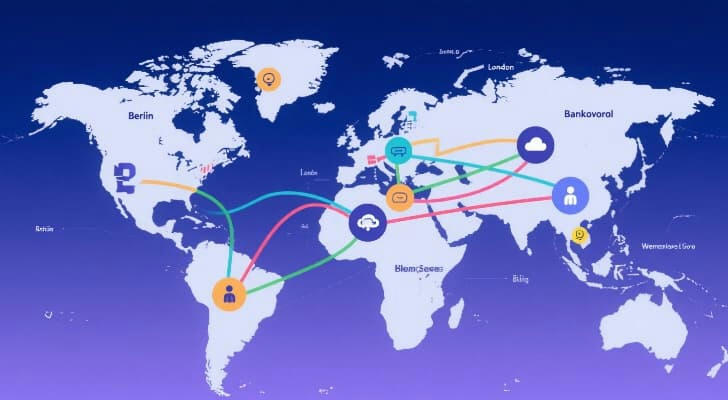
🎯 Conclusion: Remote Work Will Stay—Careers Must Move Forward
From multinational corporations to startups, remote work is becoming part of the core operating system. According to Microsoft's research, the number of hybrid roles listed on job platforms rose over 50% between 2021 and 2023.
Waiting for a return to “normal” may stall momentum. Growth no longer depends on where work happens—but on how it’s designed, documented, and delivered.
Those who thrive in this new environment typically:
Proactively structure their career development
Continuously refine communication and delivery methods
Maintain adaptive, self-driven learning cycles
Remote work won’t disappear. But it will continue to favor those who know how to build visibility, autonomy, and impact without relying on the old office scaffolding.